

If you're searching for "shopify seo strategy", you're looking for a complete plan — not random tips. You want a structured, scalable approach that reliably increases organic visibility and ecommerce revenue.
As CEO of Topify, I've reviewed thousands of Shopify stores. The top performers all share the same SEO formula: strong technical foundations, optimized product & collection pages, strategic content, and constant iteration based on real data — not guesswork.
This guide gives you the exact Shopify SEO strategy you can apply today.
1. Start With the Four Pillars of Shopify SEO
Every successful Shopify SEO strategy is built on four pillars:
- Technical SEO — clean indexation, fast performance, stable structure.
- On-Page SEO — optimized titles, descriptions, headings, images.
- Content & Collections — keyword-aligned category architecture.
- Authority & UX — trust signals, reviews, internal linking.
Each pillar amplifies the others. Ignore one, and your results stagnate.
2. Technical Foundation: Make Your Store Crawlable & Fast
Before you optimize content, Google must be able to crawl and understand your store.
Technical SEO Checklist:
- ✔ verify
/sitemap.xmlin Google Search Console - ✔ remove low-value pages (tag/search) from index
- ✔ ensure canonical tags are correct
- ✔ compress images & enable lazy-loading
- ✔ minimize app scripts & theme bloat
- ✔ keep URL handles short & descriptive
Technical issues slow crawling and block rankings — fix these first.
3. Optimize Product Pages (High-Intent SEO)
Product pages convert buyers directly. Optimizing them is the fastest SEO win.
Key elements:
- search-focused title (H1)
- helpful product description
- SEO title & meta description
- optimized images + alt text
- correct variant handling
- structured data (JSON-LD product schema)
- internal links to collections
Improved product pages = increased organic revenue.
4. Build Strong Collection Pages (Your Real SEO Engines)
Collections (categories) are the most powerful pages in Shopify SEO.
Optimize collections by:
- ✔ targeting keywords with browsing intent
- ✔ adding 120–250 words of descriptive content
- ✔ linking to sub-collections
- ✔ featuring top products first
- ✔ optimizing images & thumbnails
- ✔ writing clean handles
Google heavily relies on collections to understand your product taxonomy.
5. Build a Content System (Not Just a Blog)
Content supports SEO by targeting long-tail searches and strengthening topical authority.
Your content system must include:
- Blog posts targeting questions & problems
- Guides ("How to choose…", "Best X for Y")
- Comparison content ("vs" articles)
- Seasonal landing pages
- Internal linking hub pages
Every article should link to relevant product and collection pages.
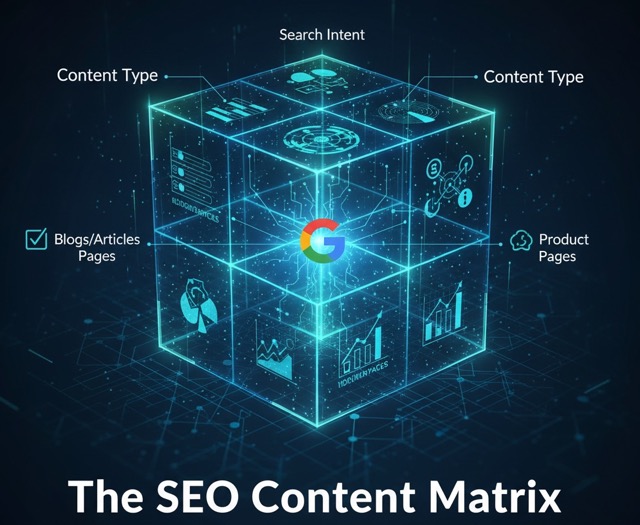
6. Align SEO With User Intent
Google rewards the pages that best satisfy the user's intent.
For Shopify stores, the main intents are:
- Informational → blogs, guides, FAQs
- Commercial → collections
- Transactional → product pages
- Navigational → brand pages
Map keywords to the correct page type — never force product pages to rank for informational terms.
7. Improve Internal Linking (The Most Underrated SEO Lever)
Internal links tell Google which pages are important.
Link strategically:
- Blog → collections & products
- Collections → top products
- Products → main collections
- Footer → high-value categories
Stores with strong internal architecture index faster and rank higher.
8. Strengthen E-E-A-T (Trust & Brand Signals)
Google evaluates expertise and trust, even for ecommerce stores.
Add trust signals:
- ✔ detailed About page
- ✔ team photos or brand story
- ✔ clear policies (shipping, returns)
- ✔ customer reviews
- ✔ real product photos
Better trust signals → higher engagement → better rankings.
9. Create a Sustainable Content & SEO Workflow
Success in Shopify SEO is about consistency, not perfection.
Weekly workflow:
- review Search Console performance
- optimize declining pages
- refresh metadata for top URLs
- publish one new content piece
- fix indexation issues
This continuous cycle compounds results every month.
10. Use Topify to Drive Smart SEO Decisions
Most Shopify SEO strategies fail because brands can't connect SEO with revenue. Topify solves that.
Topify shows:
- which pages bring SEO revenue
- which keywords actually convert
- which pages are declining or trending
- indexation & crawl issues
- collection performance vs. product performance
SEO without revenue analytics is guesswork. With Topify, it becomes a growth engine.
11. Shopify SEO Strategy Checklist (Copy & Paste)
- ✔ clean technical foundation
- ✔ fast-loading store (CWV optimized)
- ✔ optimized product pages
- ✔ powerful collection structure
- ✔ strategic blog & content system
- ✔ smart internal linking
- ✔ strong brand trust signals
- ✔ continuous improvements
- ✔ SEO performance tracked via Topify
Final Thoughts from Udjin
A winning Shopify SEO strategy isn't complicated — it's consistent. When you combine solid technical foundations, strong on-page SEO, collection architecture, and continuous optimization based on real data, your Shopify store becomes a traffic machine.
Follow this framework, stay consistent for 90 days, and you'll see measurable ranking growth and higher organic revenue — guaranteed.
And with Topify, you'll not only see the results but understand exactly why your SEO strategy works and how to scale it further.