

SEO Guide

SEO for Stores in 7 Steps (A Simple Guide)

Udjin, CEO

Udjin

CEO

3 min read

1) Keyword Research — find the right terms

Do

  • Target commercial intent queries (brand + product type, “buy,” “price,” “delivery”).
  • Use long-tail phrases—more specific, often higher intent.
  • Check competitors to learn which keywords drive their traffic.

How Topify helps

  • Queries table with impressions, clicks, CTR, and average position for each term.
  • Views Popular / Growing / Decaying surface leaders, momentum, and early declines.
  • Near-Top 5 highlights keywords in positions 6–10 where small tweaks can break into the top results.

2) On-Page SEO — match the page to the query

Do

  • Title: ~60 characters; place the primary keyword early.
  • Meta description: 150–160 characters; clear and click-friendly.
  • Headings (H1–H3): logical structure that answers the main intent.
  • Internal links between related pages; URLs short and readable.

How Topify helps

  • Bulk SEO templates for titles, metas, and alt text.
  • AI content & JSON-LD generation to cover essentials quickly.
  • Internal Links Optimizer suggests high-value interlinks to strengthen topical clusters.

3) Content Optimization — write for users, not robots

Do

  • Satisfy the user’s intent (informational, comparison, purchase).
  • Place keywords naturally—avoid stuffing.
  • Add descriptive alt text for images and make content easy to read on mobile.

How Topify helps

  • Growing / Decaying views reveal content gaining or losing momentum.
  • AI hints and reusable templates speed up high-leverage updates.

4) Technical SEO — remove friction

Do

  • Improve Core Web Vitals and page speed.
  • Ensure mobile friendliness and HTTPS for trust.
  • Maintain an XML sitemap and correct robots.txt.
  • Monitor indexing issues in GSC.

How Topify helps

  • GSC coverage & performance side-by-side for quicker diagnosis.
  • Chrome Extension (On-Page SEO): inspect any page in one click.

5) Off-Page SEO — build authority

Do

  • Earn quality backlinks (partnerships, directories, guest posts).
  • Promote and distribute content beyond your site (social, communities).

How Topify helps

  • AI Mentions Report shows who references your brand and where.
  • Match link bursts to visibility trends in the dashboard to prove impact.

6) Local SEO — when geography matters

Do

  • Complete and optimize your Google Business Profile.
  • Keep NAP (Name, Address, Phone) consistent everywhere.
  • List in trusted local directories.

How Topify helps

  • Countries and Devices splits reveal strong and weak markets.
  • Compare CTR/position by country to guide assortment, pricing, and shipping decisions.

7) Analytics & Monitoring — measure, compare, improve

Do

  • Track trends by day / week / month and keep notes with annotations.
  • Prioritize tasks by business impact (what drives clicks & revenue).

How Topify helps

  • Main time series + KPI cards (impressions, clicks, CTR, average position).
  • Annotations on charts for releases, promos, pricing changes.
  • Automatic daily GSC sync with up to 50k rows/day, deep filters, and export to CSV/Sheets.

Quick launch checklist

  1. Connect your Google account with access to your store’s GSC property.
  2. Run the first sync (last 16 months of history).
  3. Open the dashboard:
    • Check Near-Top 5 and Growing/Decaying.
    • Add annotations for releases and campaigns.
    • Fix internal links and metadata on priority pages.
    • Review Countries / Devices splits and adjust.
  4. Repeat weekly: analyze → prioritize → implement → verify.

Bottom line: These seven steps are enough to build steady SEO growth. Topify removes busywork, brings complete GSC data into one place, and highlights the work that actually moves traffic and revenue.

Share Article

Related Articles

Featured image for AI Tools for SEO: The Best Paid & Free Options for Shopify Stores in 2024
SEO Shopify Ecommerce SEO AI Tools Content Marketing Keyword Research On-Page SEO Conversion Rate Optimization Topify

AI Tools for SEO: The Best Paid & Free Options for Shopify Stores in 2024

Most Shopify brands know they "should use AI" for SEO—but end up with random tools and messy content. This guide breaks AI tools into seven jobs (research, keywords, images, copywriting, content, design, and on-page SEO) and shows how to use both paid and free options to grow organic traffic and sales for your store.

Featured image for 11 Best SEO Keyword Research Tools in 2025 (For Shopify & Ecommerce Stores)
SEO Shopify Ecommerce SEO Keyword Research Content Marketing PPC Topify

11 Best SEO Keyword Research Tools in 2025 (For Shopify & Ecommerce Stores)

Choosing the right keyword tools can make or break your Shopify SEO in 2025. This guide breaks down 11 of the best options—from heavyweights like Ahrefs and Semrush to lightweight browser extensions like Keywords Everywhere and Keyword Surfer—and explains exactly how to use them to grow organic traffic and sales, not just rankings.

Featured image for How to Become an SEO Expert in 2025 (Roadmap for Shopify & Ecommerce)
SEO Shopify Ecommerce SEO AI SEO Technical SEO Content Marketing SEO Career Topify

How to Become an SEO Expert in 2025 (Roadmap for Shopify & Ecommerce)

Most Shopify marketers don't need another random SEO tip—they need a clear roadmap. This guide breaks down how to become an SEO expert in 2025 step by step: learn the basics, master technical and AI-driven SEO, build a repeatable process, specialize in ecommerce, automate tasks, and use free tools with data from Topify to keep improving.

Featured image for The SEO Content Matrix for Google: A Practical Content Plan for Shopify Stores
SEO Shopify Ecommerce SEO Content Strategy Google Search Content Marketing UX Keyword Research Topify

The SEO Content Matrix for Google: A Practical Content Plan for Shopify Stores

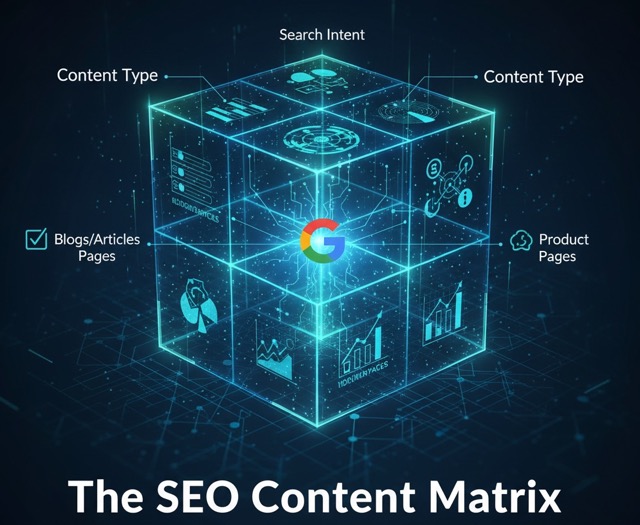
Most Shopify brands publish content without a clear map: a random product guide here, a blog post there, and no plan for how it all works together in Google. The SEO Content Matrix for Google turns your ideas into a simple grid—by intent and by time—so you know exactly which pages to create to drive impressions, convert traffic, build authority, and keep customers coming back.

Featured image for Fashion E-commerce SEO Guide for Shopify Brands
Fashion SEO Ecommerce SEO Shopify SEO Fashion Marketing Apparel SEO Category SEO Topify

Fashion E-commerce SEO Guide for Shopify Brands

Fashion and apparel SEO has unique challenges: fast-changing inventory, seasonal trends, rich imagery, and high competition. In this guide, Udjin (CEO of Topify) breaks down a complete Fashion E-commerce SEO strategy specifically for Shopify stores — from collection architecture and seasonal content to lookbooks, influencer backlinks, and optimizing filters.

Featured image for Shopify Image SEO: How to Optimize Product Photos for Google
Shopify SEO Shopify Image SEO shopify seo image Ecommerce SEO Technical SEO Page Speed Topify

Shopify Image SEO: How to Optimize Product Photos for Google

Most Shopify guides treat images as decoration. In reality, image SEO can drive thousands of extra visits from Google Images and improve your overall rankings. In this article, Udjin (CEO of Topify) explains step by step how to optimize every product and collection image for search—covering file names, alt text, size, compression, lazy loading, and structured data for the query "shopify seo image".

Featured image for Shopify Technical SEO Checklist
Shopify Technical SEO Technical SEO Ecommerce SEO Shopify SEO Core Web Vitals Crawl Optimization Indexation Topify

Shopify Technical SEO Checklist

Technical SEO is one of the biggest ranking factors for Shopify stores—yet also the most misunderstood. In this advanced guide, Udjin (CEO of Topify) presents a complete Shopify Technical SEO checklist, including site speed, URL structure, indexation, duplicate content, structured data, Core Web Vitals, internal linking, and theme-level optimizations.