

SEO used to mean "rank on Google." Today, search happens everywhere: in AI overviews, on YouTube, in app stores, inside Reddit threads, even inside ChatGPT. That's why modern SEO is turning into Search Everywhere Optimization.
This is the "New SEO" Game: 9 levels that stack on top of each other. Traditional SEO is still Level 1—but the real growth starts when you climb the rest of the map.
What is the "New SEO" Game?
The New SEO Game is a way to think about visibility in an AI-first world. Instead of optimizing for one search engine, you optimize for every place people go to discover answers, products, and brands.
If people search it, you can optimize for it. That includes classic web search, AI answer engines, community platforms, paid placements, and niche ecosystems like Amazon or app stores.
Level 1 – Traditional SEO
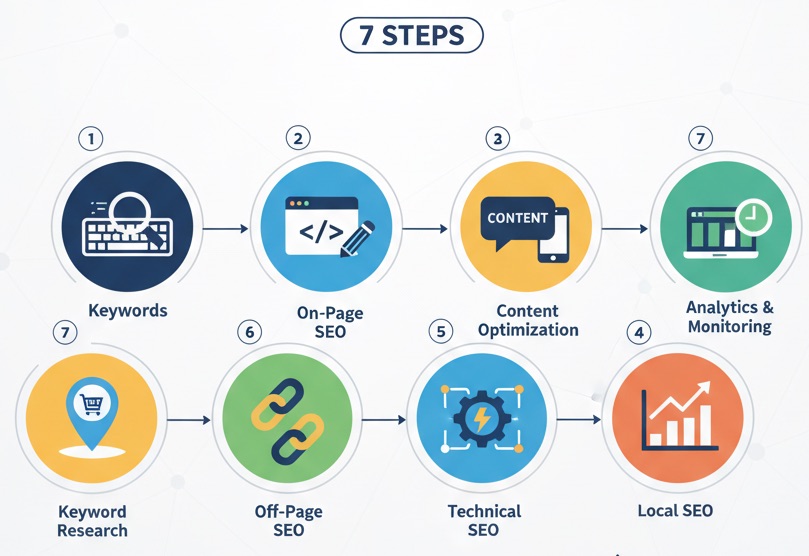
What it covers: keywords, backlinks, on-page optimization, and technical health.
Traditional SEO is still the foundation. You research search intent, create useful content, optimize titles and headings, fix crawl issues, and build relevant links. Without this base, everything else becomes harder—and often more expensive.
Level 2 – AI Search Optimization
Where it happens: AI Overviews, AI Modes, ChatGPT-style search experiences.
AI search doesn't just crawl pages; it chooses sources to summarize. Your goal is to be that source. That means:
- Publishing clear, structured answers with headings, lists, and FAQs.
- Using schema and entities so models can understand who you are and what you do.
- Building authority and trust so your brand is a safe citation for AI systems.
You're no longer just optimizing for bots that crawl—you're optimizing to be selected by models that generate answers.
Level 3 – Paid Search Visibility
Where it happens: Google Ads, YouTube Ads, other search ad platforms.
Paid search lets you buy your way into visibility. It's fast, measurable, and powerful—but it's rented space. When you stop paying, you disappear.
In the New SEO Game, you combine paid and organic: ads capture short-term demand while organic search, AI visibility, and content build long-term equity.
Level 4 – LLM Answer SEO
Where it happens: ChatGPT, Perplexity, Claude, and other LLM-powered tools.
People now ask AI tools questions instead of typing them into a traditional search bar. LLM Answer SEO means creating content that these models love to retrieve, cite, and summarize:
- Deep, well-structured guides that fully answer a topic.
- Clear definitions, step-by-step instructions, and examples.
- Evidence-backed claims, stats, and case studies that make your content credible.
The more your brand appears as a source in AI-generated answers, the more invisible "SEO" work you've done.
Level 5 – Brand Authority SEO
Where it happens: brand mentions, unlinked citations, expert roundups, PR.
Search engines and LLMs don't just look at your site—they look at what the internet says about you. Brand Authority SEO focuses on:
- Earning mentions in industry media, podcasts, and roundups.
- Collecting reviews and testimonials across platforms.
- Building a recognizable brand that people search for by name.
Authority turns your brand into an entity that algorithms trust. This makes all other SEO levels more effective.
Level 6 – Community SEO
Where it happens: Reddit, Quora, Slack communities, Discord servers, niche forums.
Real users ask real questions in communities long before they land on your site. Community SEO means:
- Participating honestly in threads where your expertise helps.
- Answering questions with value first and links second.
- Becoming a trusted voice in the places your audience hangs out.
These conversations shape perception, drive branded searches, and often rank directly in Google themselves.
Level 7 – Parasite SEO
Where it happens: Medium, LinkedIn Articles, Substack, and other authority platforms.
Parasite SEO is about ranking via platforms you don't own—sites that already have high domain authority. You publish content there to:
- Capture competitive keywords that are hard to win on your own domain.
- Show up where decision-makers already consume content.
- Send referral traffic and authority back to your main site.
Used well, these platforms become "satellite assets" that support your core SEO strategy.
Level 8 – Platform-Specific SEO
Where it happens: Amazon, app stores, YouTube, TikTok, LinkedIn, and other ecosystems.
Each platform has its own internal search engine and ranking factors—click-through rate, watch time, reviews, saves, installs, and more. Platform-Specific SEO means tailoring your approach to each:
- Optimizing product listings for Amazon search and conversions.
- Crafting titles, thumbnails, and hooks for YouTube and TikTok.
- Using tags, categories, and social proof in app stores.
You stop thinking "SEO = Google" and start thinking "SEO = every discovery surface my audience uses."
Level 9 – Topic Domination
Where it happens: everywhere—search, AI answers, communities, platforms, and paid.
Topic Domination is the finish line of the New SEO Game. You don't just rank for a few keywords—you own the conversation around a topic:
- Your site ranks with comprehensive pillar pages and supporting content.
- AI tools and LLMs frequently cite your brand as a source.
- Communities mention your guides and tools when people ask questions.
- Your content shows up across YouTube, podcasts, newsletters, and social feeds.
This is how modern brands scale visibility in the AI-first era: by showing up everywhere people search, ask, and decide.
How to start playing the New SEO Game
You don't have to master all nine levels at once. Start with a solid traditional SEO base, then layer on:
- AI search optimization for your key guides and landing pages.
- One or two LLM-friendly cornerstone pieces per topic.
- A simple brand authority and community plan (mentions, reviews, forums).
- One platform where your audience already spends time (YouTube, LinkedIn, or a marketplace) and learn its search system.
The more levels you unlock, the harder it becomes for competitors to ignore you—and the easier it becomes for customers to find you, anywhere they search.